NO SOUND IS INNOCENT: AMM AND THE PRACTICE OF SELF-INVENTION
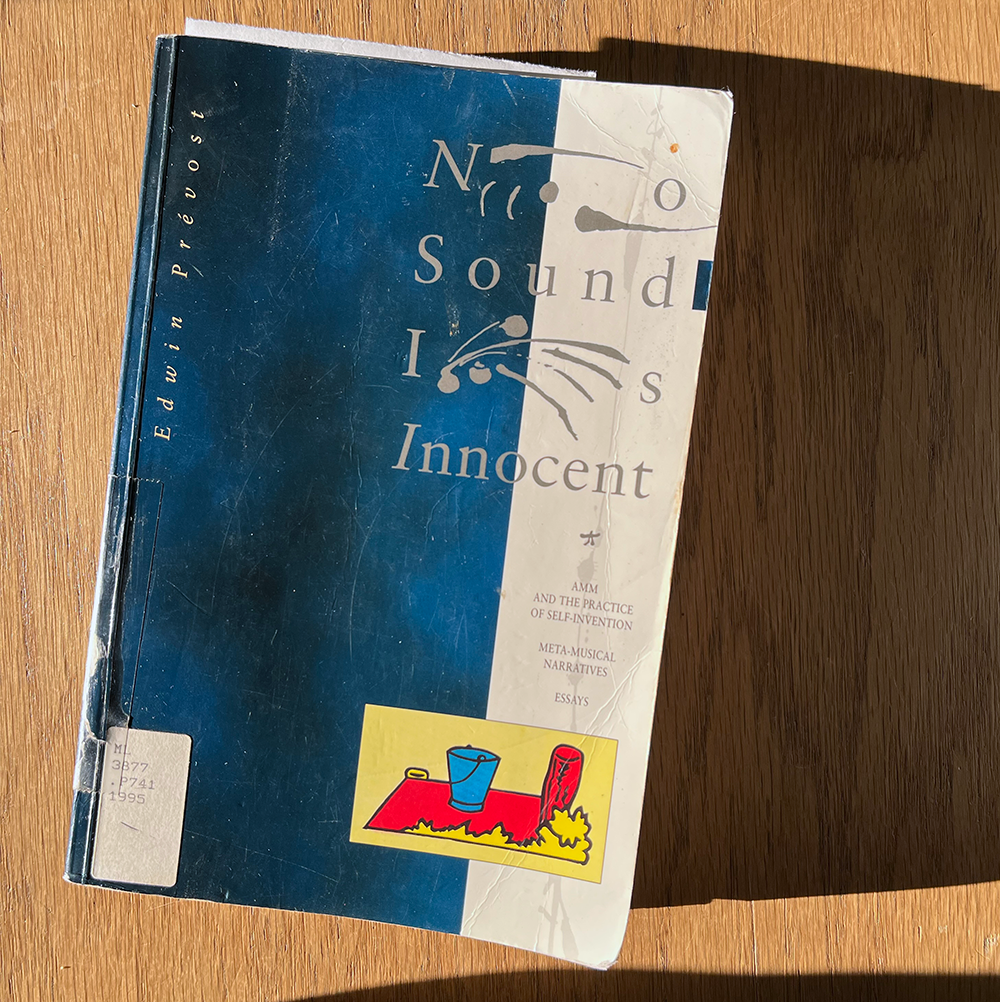
short bluesky summary ⌘ A lifelong improvisor mounts a spirited defense of "new sonic relations": the creation of sounds and musics that are non-commercial, amateur/non-specialist, collective/dialogic, and "ugly"/anti-bourgeois
■ ■ ■ Notes [oldest to newest]
4. Two kinds of dexterity, for (meta-)musicians
5. Music that supplies no market
7. AMM axioms
8. The color and texture of sound
9. Corneilus Cardew's magical rituals
11. Working with intuitive response
12. The social nature of music
13. The collective nature of jazz
14. Improvisatory music and the expression of alienation
15. European Free Improvisation
16. Composition vs improvisation
17. Total improvisation vs professional training
18. Improvisation in community
20. Improvisation, process, and transience
22. Amateurs and experts, in improvisation
25. Improvisation as a life's work
26. The "sense of occasion" in music
27. Technical specialization vs. culture
29. Free improvisation vs. "hack-created" jazz
30. Baudelaire's "art for art's sake"
31. Improvisation, historically
33. C. Small's "Improvisation: History, Directions, Practice"
34. "The nature of sound is transient"