JUNK HEAD (2017) ★
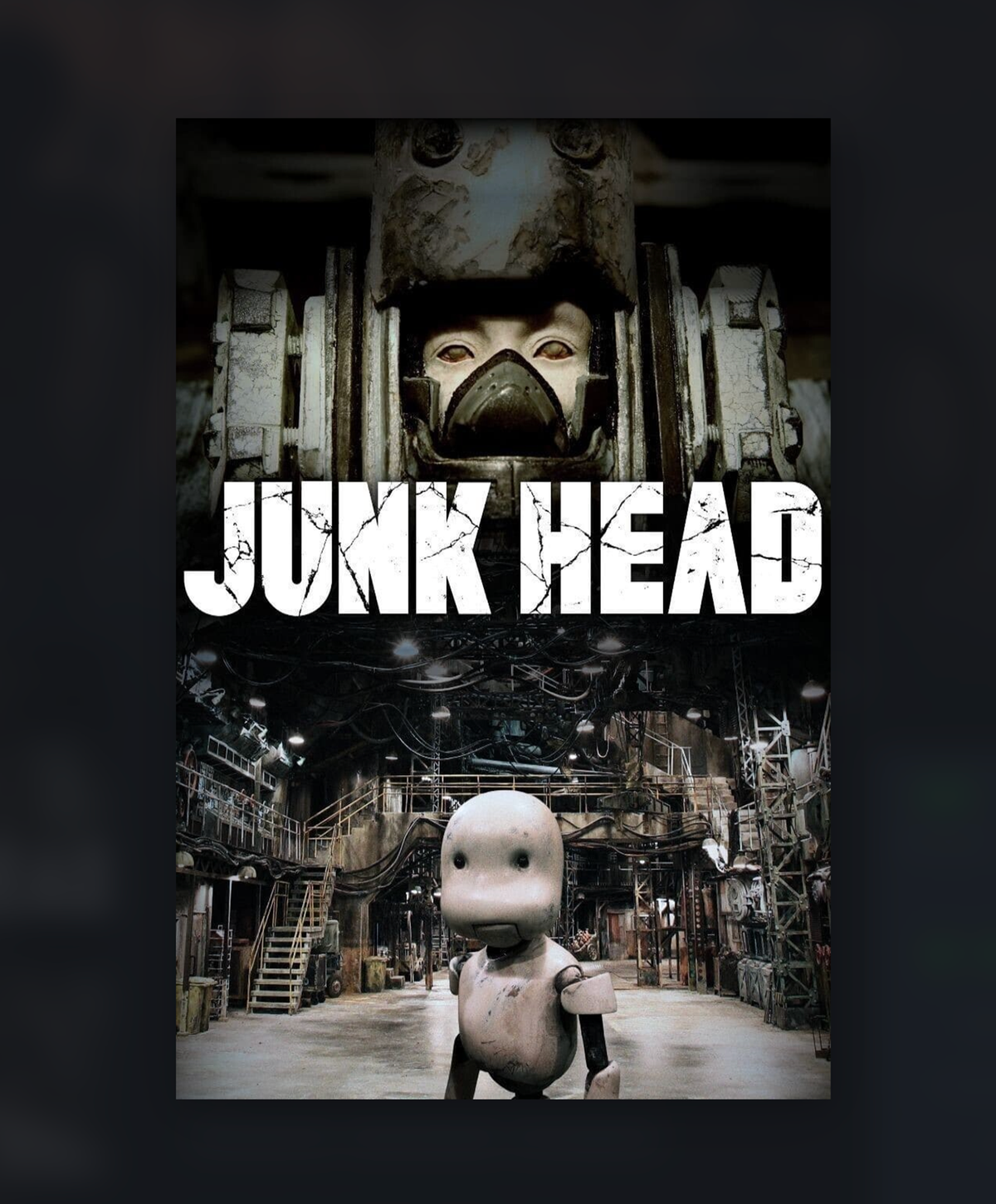
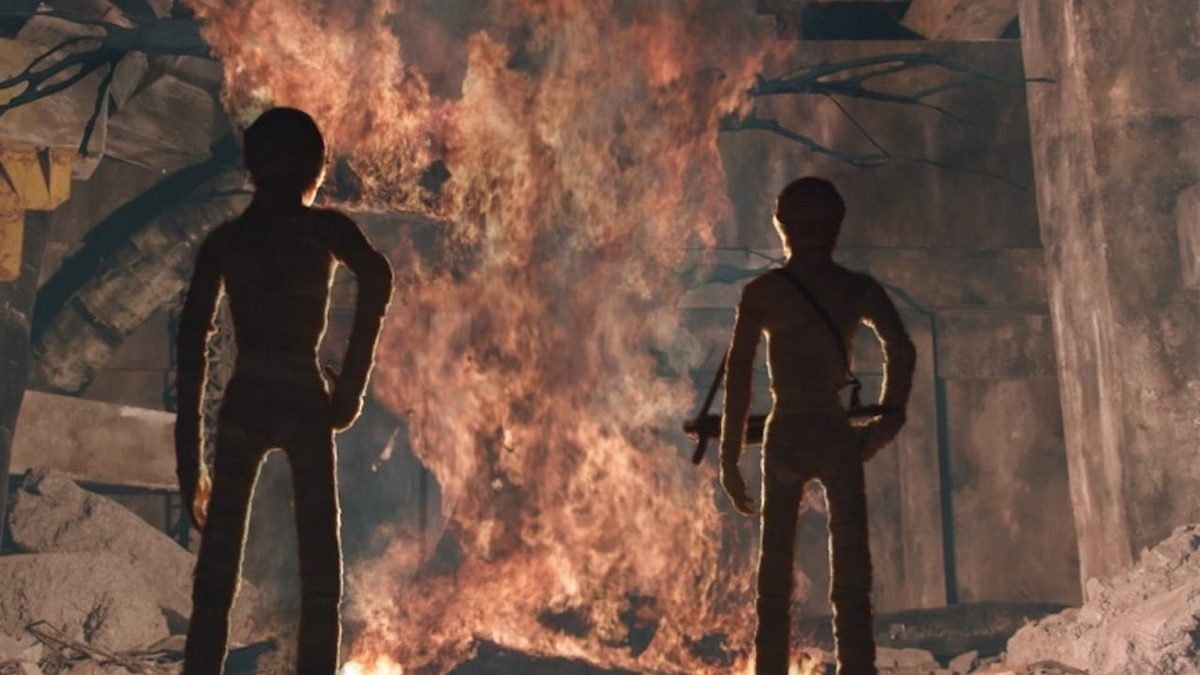
Let's be honest: I'm pretty primed to love a film that follows a plucky cyborg as he explores the grimy depths of a sprawling subterranean maze populated with mysterious inhabitants and vicious monsters. However, the backstory of this particular film sets it apart and is well worth recounting here: In 2009, interior decorator Takehide Hori—then nearly forty years old— decided to undertake the project of making a stop-motion science fiction film, almost entirely unassisted. Four years later (in 2013) he had a short film, which he used to secure funding to undertake a feature-length version (begun 2015, completed 2017, re-edited 2021).
Take a moment to imagine the labor involved in this. One person responsible for the design, model construction, set building, photography (140,000 frames), script, music, and most of the character voices (in a form of improvised grammelot, no less)? This is like the ultramarathon version of independent filmmaking. It's also only the first film in a proposed trilogy (the sequel was completed in 2025). So, yeah, this film might, ultimately, be "for" people like me—people who vibe with cyborgs and cool monsters and subterranean cities—but just about anyone who likes knowing that there are still people out there who toil painstakingly for years in pursuit of a desire to make a thing should be able to derive some enduring delight from this.
And I do think the film aims to be delightful. It's actually surprising how accessible the end result feels, especially given the obsessive nature of its production. The film is loaded with weird touches, and it always feels original—but it stops well short of manifesting a particularly "outsider" vision (in this way it contrasts interestingly against Mad God, another labor-intensive stop motion achievement, which feels far more private and gnomic (or, if you prefer, "visionary") even though its creator, Phil Tippett, is much more of an "insider," having contributed work to big-budget Hollywood productions for decades). Junk Head plainly wants to deliver something with wide appeal: the overarching narrative has a sturdy familiarity that a ten-year-old could grasp; the individual plot episodes are standard-issue crowd-pleasers (here's a monster encounter, here's a fetch quest, here's a chase); the tonal darkness of the dystopia is consistently leavened with offbeat humor and offhand charm. It wears its influences openly and without guile (a surprising range of them, too—like, sure, the creature design has predictable traces of Alien, but I wasn't expecting physical comedy sequences that feel drawn straight out of Keystone Cops).
Ultimately, no one will mistake Junk Head for a big-budget film—every sequence has its ramshackle side—but it nevertheless provides a nonstop assortment of mainstream pleasures (battle sequences! romance! dick jokes!) in a slightly grubby handmade package, made more lovely, not less, by the fingerprints left on it. This "best of both worlds" result is, I think, one to take inspiration from, especially as we warily consider the impending arrival of all-slop AI feature films which I suspect will prove to be the exact antithesis of a film like this (all capital, no love) and which we should be prepared to soundly reject.
 jbushnell