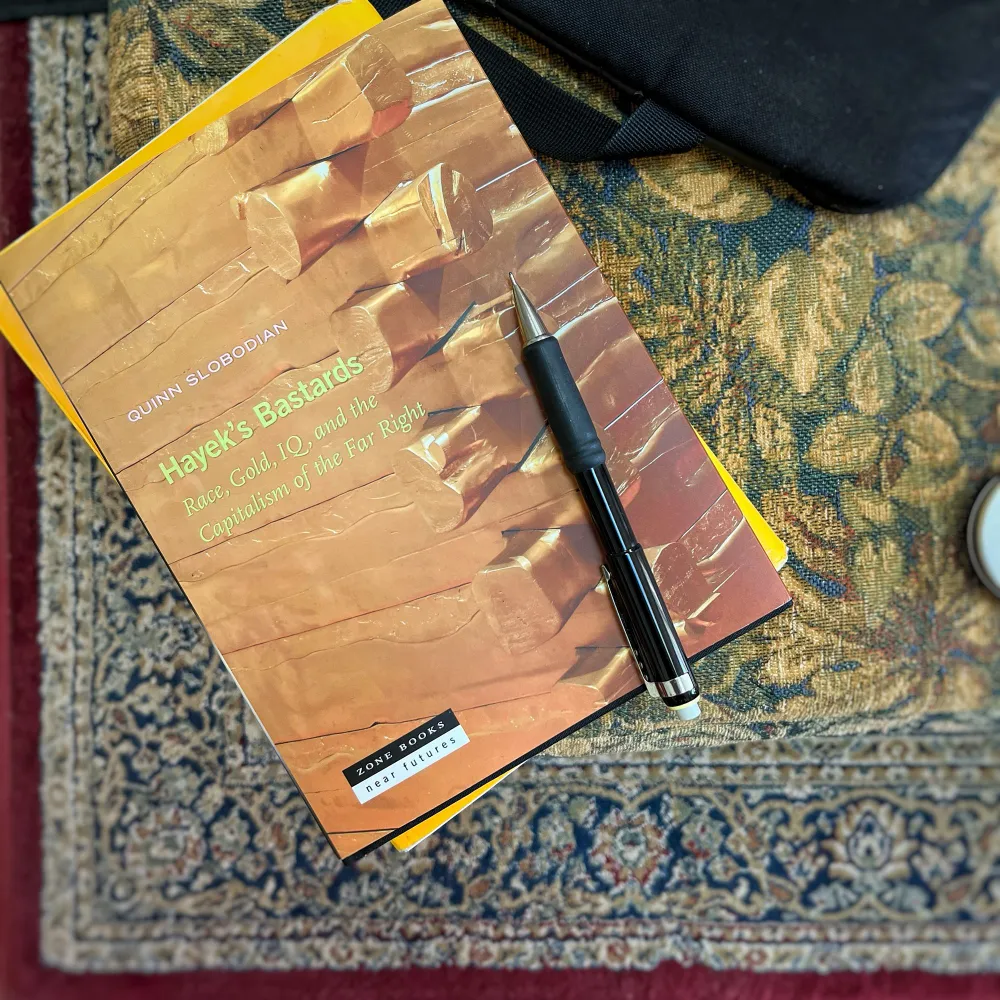
Paul B. Preciado's TESTO JUNKIE
Notes [oldest to newest]
1. The "political management of living"
2. The "notion of the hormone"
3. 1941: Synthetic progesterone and estrogens
4. Robert Stoller's "masculinity" and "femininity"
5. 1946-49: Harod Gillies and Michael Dillon
6. 1952: George [Christine] Jorgenson
9. "The theoreticians of post-Fordism"
12. Preciado on the porn industry
13. "The autopornographic body"
14. Pharmacopornographic capitalism
17. The body as fluid, dispersed system
18. Necropolitics
19. Sex and "technopolitical management"
20. Orgasmic power and the capacity for work
21. The disciplinary regime of heterosexuality
22. Preciado on Foucaultian "biopower"
23. "Sexopolitics"
26. The anus and the social field
27. Thomas Laqueur's "Making Sex"
28. 1880: Coinage of "sexuality"
29. Technologies of "production of the body"
30. The advent of sexual difference
31. Somatechnics32. The body's political potential
33. The technical construction of sexual difference
35. Ideals of masculinity and femininity
36. Regimes of body production
37. "Biocodes"
38. Phalloplasty, vaginoplasty, rhinoplasty
39. The normative regime versus the proliferation of techniques
42. The "brutal political arrangement" of gendered subjectivity
44. "Testosterone isn't masculinity"
45. Entheogenics
46. Witch hunts and colonial expropriation
47. "Medieval pharmacological traditions"
48. Recreating hallucinogenic ointments
52. "Witchcraft and the Gay Counterculture"
53. Women and the circuits of economy
55. The body as communication network
56. Endocrinology and hormonal theory
58. The trafficking of human organs
60. Coded desire
61. The state, desire, and fantasy
63. The multiplicity of configurations
65. Pornography, the public, and the private
67. "Porn envy" in the culture industry
68. Annie Sprinkle, and sexuality as performance
69. The hegemonic understanding of pornography
70. Pornographic desubjectification
71. "The social and cultural construction of sexual difference"
72. Teresa de Lauretis and "eccentric" feminism
75. The concentration camp and biomaterial research
77. Estrogen, progesterone, and the pharmaceutical industry
78. The "fiction of biofemininity"
79. "Phallocracy"
80. Masculinity's power and femininity's regulation
82. Sildenafil
83. 1951: Earliest prototype of the contraceptive pill
88. The FDA and the menstrual cycle
91. Sue Ellen Case
92. Collage and corporal transformation
93. "Exquisite Corpse: Surrealism and the Black Dahlia Murder"
94. The Pill and the production of cosmetic femininity
95. Alliances between incompatible gender regimes
96. Hormonal treatment for cis males
97. Dominant public signifiers of gender
98. The "semiotechnical virilization" of women
99. Antiandrogens
101. Anne Fausto-Sterling's "The Five Sexes"
102. State feminism vs transfeminism
103. Visions of a contraceptive feminism
105. Against white, colonial feminism
106. Ellen Willis and pro-sex feminism
107. Sex workers and antiporn feminism
108. The coining of "sex work"
109. The post-porn transfeminist aesthetic
110. The dominant recoding of "queer"
111. Snuff films
112. "Autovivisection"
113. "On Hashish"
114. "Dealing with cultural codes"
115. "Gender suspicion"
116. The "collective experience" of gender
119. Anatomical truth and cultural practices
120. "Sex, Drag, and Male Roles"
121. "Drag king knowledge"122. Judith Butler's "Antigone's Claim"
123. "Hormonal identity"