LITTLE DIETER NEEDS TO FLY (1997)
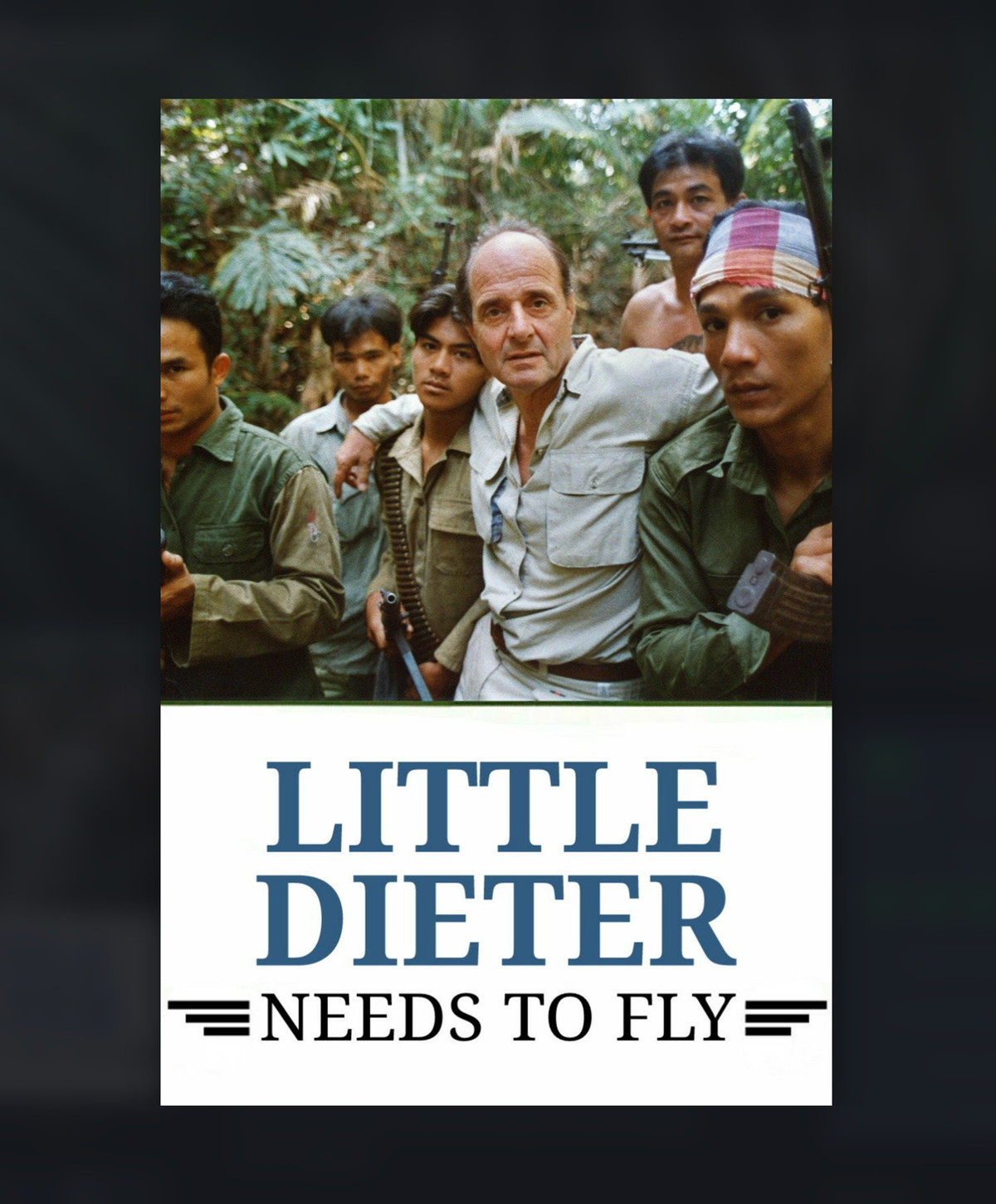
I want to start by saying that Dieter Dengler's wartime capture, escape, and rescue makes for a gripping story as well as a compelling reminder that human beings can persist through unimaginable suffering, emerge out the other side, and find something that, for all intents and purposes, looks like happiness. I was never bored.
With that said: I was nagged, while watching this, by the sense there are at two ways that this film could be *more* compelling.
(1) Dengler himself is an interesting figure and his tale is worth telling, even worth hearing in his own words—but he is not an especially gifted raconteur, and he rattles through the details briskly and without much in the way of evident emotion. There's a strange fascination that comes with watching someone such an intense story so matter-of-factly (in a way, you could argue that this is a film about the power of compartmentalization). But it's hard not to imagine the power that the story could have were it relayed by a more emotive teller.
(2) Herzog's decision to bring Dengler back to Laos and re-enact portions of his captivity, forced march, and torture is an absolutely wild decision, and while it produces some tremendously dissonant imagery, no one actually seems especially interested in interrogating the choice. Dengler mentions in an offhand way that he agreed to it as a means of possibly putting some demons to rest, but we get very little about the process of who came up with the idea in the first place; how it was negotiated or arranged; whether there were challenges in implementing it; whether it had emotional fallout; or even whether it was successful at doing what Dengler hoped it would do. You can imagine putting this film in a repertory series on "the politics of re-enactment," but it has surprisingly little interest in engaging with those politics in a substantive way (to say nothing of problematizing its own choices). The offhandedness may be part the point (in a way, this is just "Herzog being Herzog") but I spent some time comparing this film against another documentary that it clearly helped to inspire—Joshua Oppenheimer's The Act of Killing. Act of Killing is similarly based around the making of a traumatic re-enactment, but it lavishes a comparative surfeit of attention on the queasiest aspects of this work, with special attention devoted to how re-enactment can wreak havoc on the psychology of its participants, and I think it serves as a stronger and richer film for those exact reasons.
 jbushnell