BACKROOMS (2026)
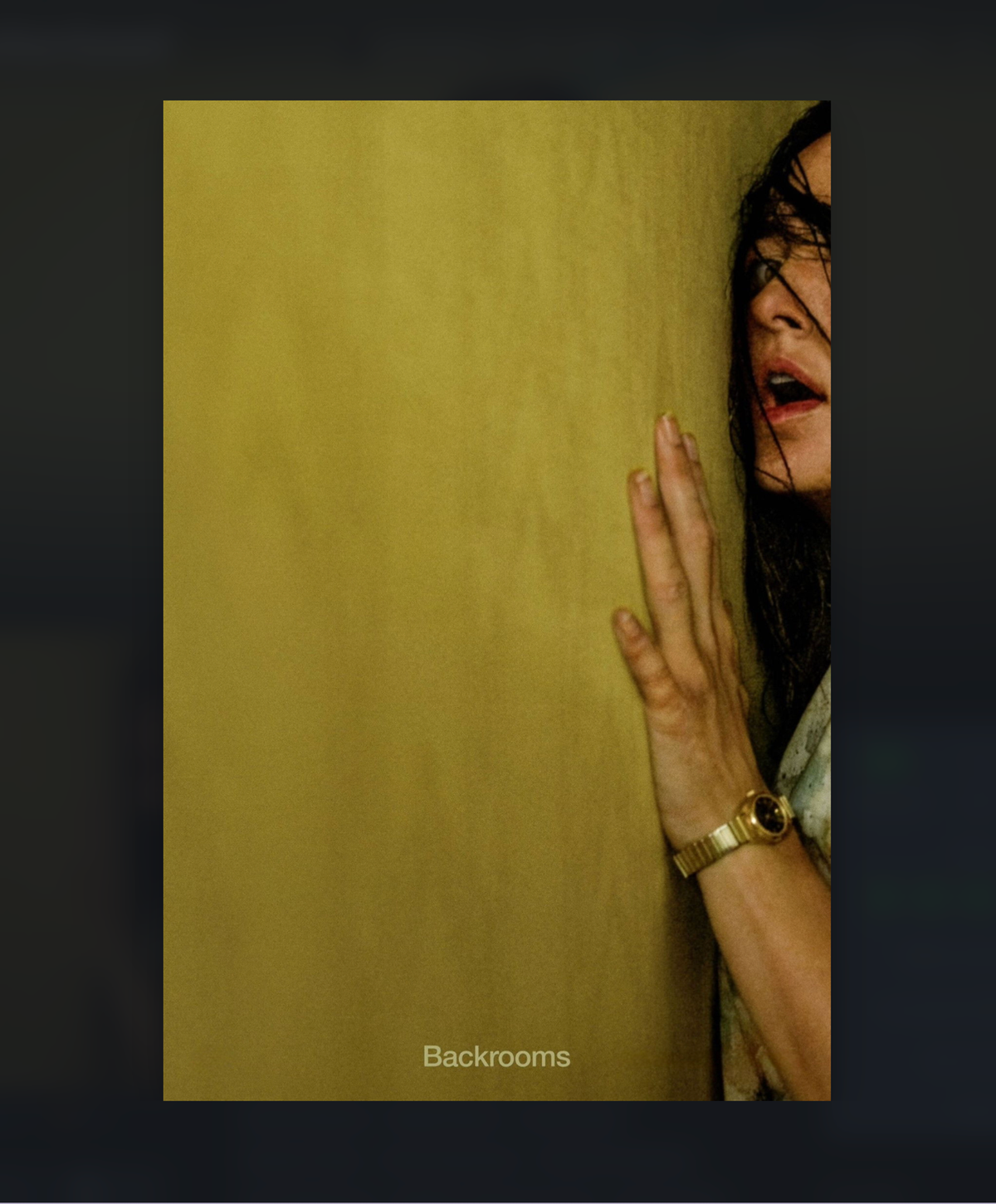
I once saw someone crack a joke on social media about A24-branded horror: the monster is always a metaphor for the main character's trauma. Backrooms is not exactly beating these allegations—in fact, we could argue that it doubles down, giving us two main characters, each with their own trauma, ripe for monstrous transmogrification. We may even be making the subtext into the text at this point: heck, practically half the film takes place in a therapist's office.
Light eyerolling aside, a reliance on a trauma theme (x2) isn't really enough to put me off: I've enjoyed enough A24 horror that I can accept this as the price of admission. But this can be done well or it can be done poorly, and I gotta say that I'm not 100% sure that Kane Parsons has... thought all that deeply about trauma? The therapy scenes in the film struck me very much like they were made by someone who doesn't have the world's best understanding of how therapy works or what it's supposed to do—ultimately, much of the handling of this material gave me the feeling that I was watching a film made by a young person whose understanding of trauma derives less from lived experience or sustained contemplation, and more from, well, from... watching A24 horror films? Since none of the therapy stuff or traumatic backstory was really working for me, I was left with the weird feeling that I actually wanted the characters to be less developed: Clark and Mary could have functioned just fine as simpler, blank-slate figures, free of complicating baggage—I would have jettisoned Clark's misogyny in particular—which might have streamlined the film effectively in places where it currently feels unhappily saddled.
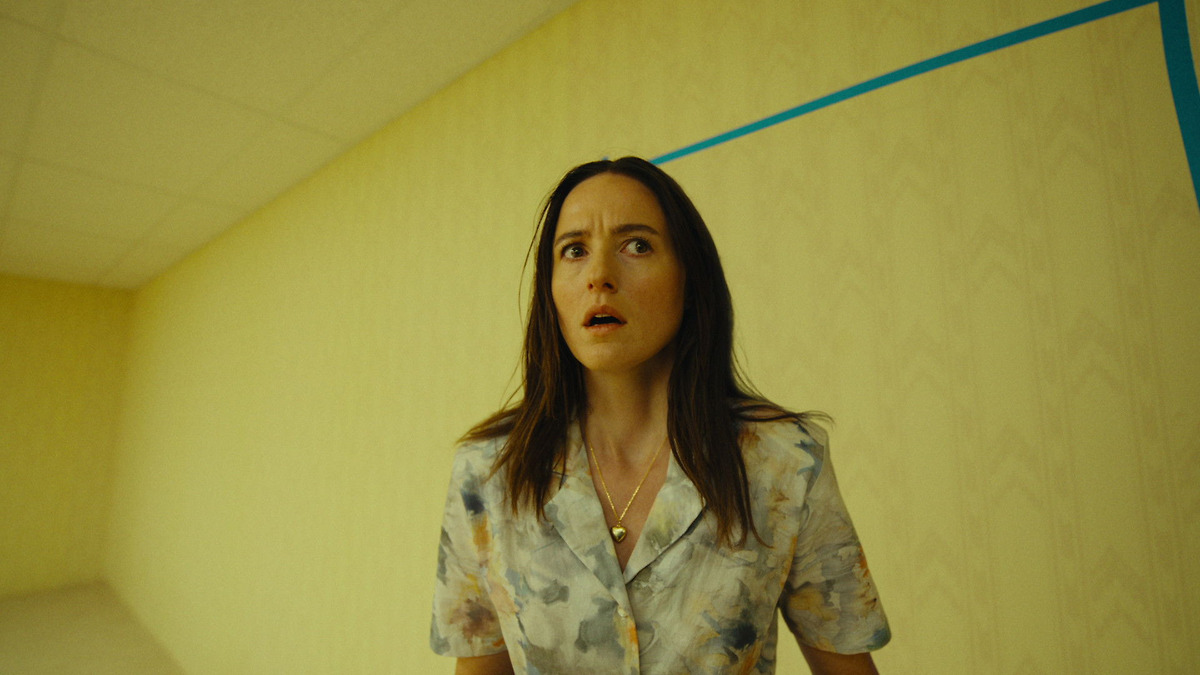
And yet the Backrooms themselves may be resilient enough as a setting (and as a concept) to survive these gripes, and Parsons deserves credit for approaching that material with a steady hand. Each of the major Backrooms sequences is satisfyingly gripping, visually interesting, genuinely spooky. (I feel obliged to mention that there are some racialized optics in the climactic sequence that a more cautious/more experienced director might have ably sidestepped.) And I appreciate that the script doesn't burden the concept overmuchly with unwanted lore-dumps or explanations. Overall, the film benefits from having an assortment of unanswered questions at the end of its runtime: this deepens its unsettling qualities rather than diluting them. But aside from an "it looks great on a big screen" quality (which counts for something!), I'm not sure that this feature gives us anything that the YouTube shorts hadn't already given us in abundance.
 jbushnell