12/11-12/20
Rian Johnson's GLASS ONION // Guillermo del Toro's FRANKENSTEIN // Joel Anderson's LAKE MUNGO // P. T. Anderson's MAGNOLIA
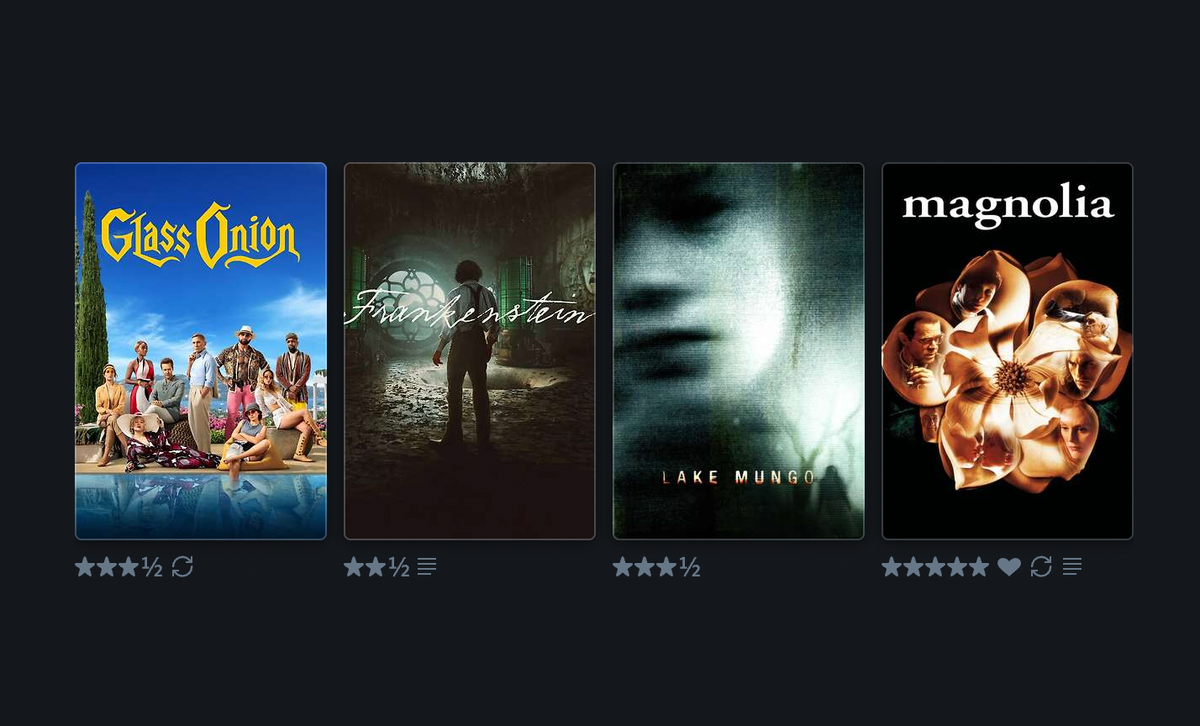
Rian Johnson's Glass Onion //
Guillermo del Toro's Frankenstein
The good: memorable creature-work, embodied well by Jacob Elordi's agile, dancerlike performance; solid costume design, especially Mia Goth wrapped in ranges of disorienting green; the slimy tile interiors of Victor's lab, which split the difference perfectly between Age of Science rationalism and Decadent rot; del Toro's ability to retain a horror-fan's pleasure in the vicious little details of violence (lavishing focus on everything from the way a falling body lands wrong to the way a bubbling wound sputters).
The bad: mistakes sentimentality for insight; mistakes ponderousness for majesty; succumbs to the modern impulse to give every Troubled Protagonist a Tragic Backstory; overstuffs the plot with needless Gothic romance baggage; indulges a latent theater-kid energy in the otherwise strong cast.
The film as a whole is maybe summed up by the choice to repeatedly squeeze in a whole new monster, the so-called "Dark Angel"—on the one hand the thing is kinda cool, and I love that del Toro can't pass up any opportunity to include a weird being, but on the other hand, it gets wielded as an embodiment of Big Themes, ultimately coming off as simultaneously heavy-handed and meaningless. This typifies the way that, when given the option between being Fun or being Important, FRANKENSTEIN reliably chooses the latter—contrast against del Toro's HELLBOY films, which I remember fondly for their tendency to go the other way.
Joel Anderson's Lake Mungo //
P. T. Anderson's Magnolia
Sorry everyone: this is still P. T. Anderson's best film. Swings for the fences in every scene and connects every time. Big emotions, always earned, thanks in no small part to a deep roster of talented players, nearly all of them supplying "career best" work or close to it. Aimee Mann's songs haven't lost an ounce of their potency; meanwhile, Jon Brion's agile, propulsive score does underrated work, supporting the big narrative with symphonic continuity and shape. Odd and surprising choices abound but the film never loses its human sensibility, something I can't always say about Anderson's later work. All in all, 10/10: for me, this is not just Anderson's best film, it's the last perfect film of the 20th century.